LETTER OF INDEMNITY AND “RETLA” CLAUSE ON LOADING STEEL CARGOES
LETTER OF INDEMNITY AND “RETLA” CLAUSE ON LOADING STEEL CARGOES
Before
the enactment of law 8.630 / 93 in Brazil, the Maritime Agencies hired directly with the
carrier whereas the sale term was "full liner" or "Liner
in" and being appointed as responsible for carrying out the shipment of
goods on board vessels, usually ships "Tramp" [1]. So were called
Stevedoring Entity. It was known as golden age of Maritimes Agencies, once they could act as
agents of the ship-owner, Charterer, Carrier,
as well as stevedoring Entity.
After
the advent of Law 8.630 / 93 which appeared in the concession and port leasing
arrangements, the agencies lost their influence and predominance. Then,
emerging the figure of Port Operator,
which as a rule is the lessee of the public ports, and must to comply with all
requirements and goals imposed by the Port Authorities, Docks companies(Companhia
DOCAS) known as Landlord system. However, maritime agencies have not
disappeared as stevedoring entity and still works in public ports, on behalf of
third-party under cargoes shipping contracts.
Calls
to point out that the law 8.630 / 93 considered as the Brazilian ports milestone
was repealed by the new act. 12,815 coming to force at 2013, this one remained
the main achievements and innovated in relation to third cargoes and hiring own
labor by private terminals without the intervention of OGMO ( manager of ports
labours) temporary dock worker or
so-called TPA's. (Stevedoring, Tally clerks repairman etc.).
Nevertheless,
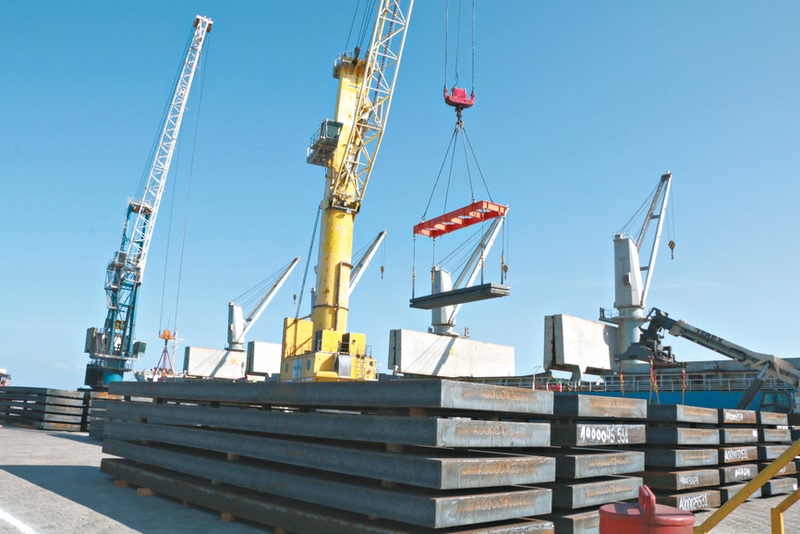
common procedure in shipment of steel products (steel plates, steel blades, hot
and cold coils, steel billets, wire coils "wire rod" and other
materials) usually an inspection on pre
shipment cargoes was held, by “ad hoc”surveyor [2] which was appointed by the shipowner or sea carrier,
also by the importer, in order to protect themselves against possible legal
claims regarding to cargoes loading conditions.
It
happens that on the survey report
issued, depicted the actual condition of the goods at the warehouse or yard,
ie; warped parts, rust, safety strip broken, cracks, etc. Although these
remarks were entered in Mate's Receipt in any way should appear on the set of
B/L (Bill of Lading) as the exporter did not agree with the remarks, once the B
/ L must be "clean" or contain the expression "Clean on
Board" In case a set of B / L was not "clean" would be
prejudice the letter of credit and
subsequent the bank payment release.
In
order to solve this imbroglio, the exporters dealt with the ocean Carrier the acceptance of
a "Letter of Indemnity" or indemnity Letter "exempting
the carrier against any future claims , case the importer entered in court
alleging defects, faults or damage of the goods received. The subject is
controversial as the courts abroad, particularly the arbitration courts and the
common Law in London has refuted vehemently "LOI" even clubs of P
& I [3] have guided its members not to accept this type of document under
penalty of incurring fraudulent and criminal sanction under international law.
In
fact, issuing a "LOI" is no guarantee of protection to the shipowner
or sea carrier. Even the addition of "RETLA clause" (possible
replacement of the B / L), the fact is that the English courts have restricted
the acceptance of these formalities and the decisions have not been favorable
to shipowners and or carriers. View case of
“The importance of the RETLA Clause in Bills of Lading has been
highlighted in the recent Breffka & Hehnke GMBH & Co KG and Others v
Navire Shipping Co. Ltd and others (The SAGA EXPLORER) [2012] EWHC 3124 (Comm) “
In some cases the US courts has
uphold such clause, but it is not a general consensus, anyhow before the RETLA
clause decision, its well advised to consult a good lawyer or vessels P&I.
To learn more about this or others
maritime subjects, pls contact our office, we are at your entire satisfaction.
Author full details:
Paulo S.Silvano Oliveira
Advogado / Lawyer (maritime expertise)
Extensão em Direito marítimo (transporte marítimo,
oil & gás, avarias, etc)
“Expertise” em portos – tendo atuado por 10 anos
em portos da VALE.
Consultoria em Empresas de Comércio Exterior,
Armadores e Afretadores, Empresas de reparos navais, etc.
Linkedin:
BR.linkedin.com/in/paulosilvano
www.abreujuris.com.br
55 27 99664 8310
1 Tramp: navios que não obedecem a uma rota regular fixa.
Dependem da oferta de carga.
2 Surveyor: Vistoriador de cargas a serem embarcadas.
3 P&I (Protecting and Indemnity) espécie de associação
ou clube de Armadores que contribuem com objetivo de se resguardarem de
possíveis sinistros marítimos.


Comentários
Postar um comentário